THE FIELD GUIDE
Farkas in The Blood of Dawnwalker
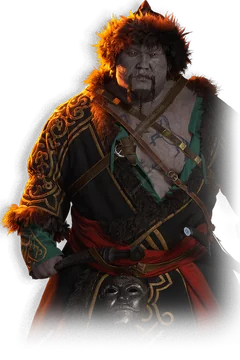
Farkas is Bakir’s jester and Coen’s inside contact during The Lunar Game. His private request concerns his younger brother, Dusan: he wants Coen to recover a ring he believes could heal him.
Farkas Dobrescu and the fall of his family
Bakir identifies his servant as Farkas Dobrescu. When Coen challenges Farkas’s account of the ring, Farkas insists that his noble birth is true. He has misled Coen about an heirloom, but he has not invented the family he came from.
Farkas describes his family fleeing when the vrakhiri arrived. His parents and cousins were killed, while he and Dusan survived in captivity. Bakir spared Farkas because he found him entertaining. This makes the jester’s position a means of survival under the man responsible for his family’s destruction, rather than a profession he freely chose.
Bakir describes him as spoils of war, reducing the former nobleman to something a victor owns.
 Farkas in the character directory
 Bakir and his court connections
What Bakir asks of his jester
Farkas’s usefulness extends beyond jokes. Poorly Scribbled Order shows Bakir telling him to compose a suitably grand letter to Brencis. The request mocks the polished language associated with Farkas’s upbringing while relying on him to supply it. His education remains useful even as his master humiliates him.
That document gives a different view of the relationship from the tournament’s public spectacle. Farkas handles words on Bakir’s behalf; he knows how to flatter, perform and keep a dangerous superior listening. When he later conceals his own purpose from Coen, those habits already have a context.
Bakir calls him “the Fox” and warns Coen that he is deceptive. Read that warning alongside its speaker’s interests: Bakir wants to undermine the servant conspiring against him. It identifies a real habit of concealment, but it is not a neutral account of why Farkas lies.
 Read the context of Poorly Scribbled Order
Dusan and the promise Bakir keeps dangling
Farkas’s account of Dusan explains the urgency behind his plan. His younger brother was terrified of Bakir. The boyar treated that fear as disobedience and punished him, leaving lasting injuries. Farkas says Bakir later admitted going too far and gave Dusan his own blood: the broken bones and swelling healed, but the recovery was incomplete.
The distinction matters to Farkas’s reasoning. He has already seen vampire blood repair some physical harm, so a further magical cure does not sound impossible to him. Yet the claim about the ring comes from Bakir himself. Bakir says it can work miracles and promises to give it to Farkas if he can amuse him enough.
That promise ties the brother’s recovery to the jester’s obedience. Farkas is trying to escape the arrangement by obtaining the ring through Coen, but his intended rescue still depends on information supplied by the same man who hurt Dusan.
How Farkas brings Coen into his plan
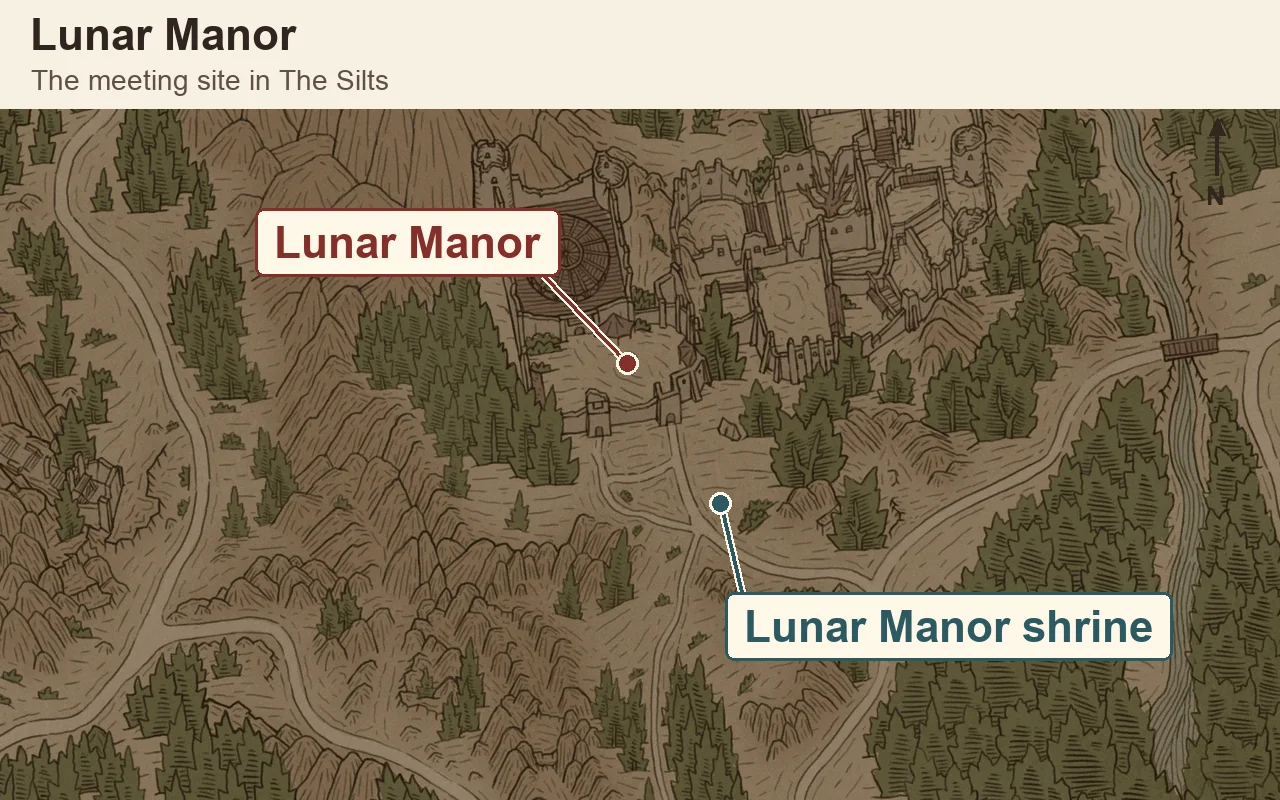
Coen becomes useful to Farkas after drawing Bakir’s anger. The jester offers access to The Lunar Game and arranges a meeting outside Lunar Manor in The Silts. His position in the household lets him turn Coen’s opposition into a plan against their shared enemy.
For players looking for Farkas at this stage, the appointment is in the afternoon. Use the Lunar Game walkthrough for invitation requirements and preparations, then follow its maze route.
Why the “family heirloom” story falls apart
Farkas initially presents the amethyst ring as something that belongs to his family. Once Coen recognises the sigils on it, that explanation becomes difficult to maintain. Farkas briefly tries to account for the magic by suggesting an ancestor might have practised it. Pressed to stop performing, he explains what happened to Dusan.
The change in his story is important: Coen is no longer simply returning stolen property. He is being asked to entrust a magical object to someone who wants to use it on an injured person. Farkas has hidden the purpose that would make Coen question the request.
Bakir also laughs at the heirloom claim when Coen asks him about it. This disputes Farkas’s ownership story, not the existence of the quest object. Its inventory name is Ring with a Purple Eye. The separate wearable called Farkas’s Ring is equipment; its name does not make it the object needed for this decision.
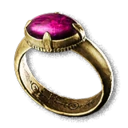 Ring with a Purple Eye: treasury pickup
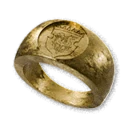 Farkas’s Ring: wearable equipment
Trusting Farkas and trusting the ring are different decisions
Coen can sympathise with Farkas without treating Bakir’s promise as reliable. His response draws on what he has done for his own family, giving him a reason to understand the lie without accepting every conclusion behind it.
Before handing over the ring, decide whether you are choosing an equipment exchange or following Farkas’s hope for Dusan. If your concern is the alternative rewards, use the recipient comparison: it lists the exchanges and the gear each would replace. For the brothers’ fate, the later encounter below is the relevant consequence. The immediate conversation alone does not tell their whole story.
The brothers’ later story in Parlita
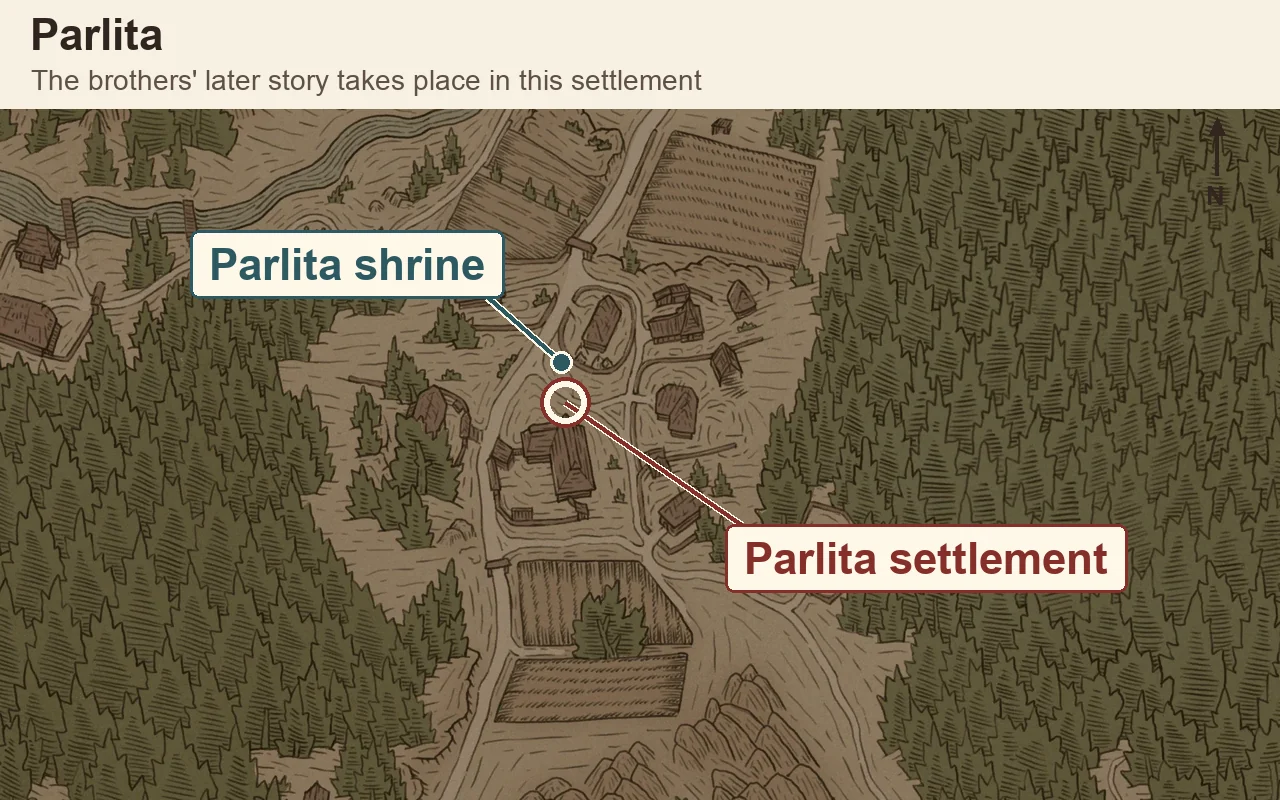
The follow-up takes place at the brothers’ cottage in Parlita, in Boar’s Back. Use the settlement and its shrine to orient yourself.
Reveal the two outcomes for Farkas and Dusan
If you give Farkas the ring, his attempt to heal Dusan ends in his brother’s death. Farkas’s journal records the ritual changing him while failing to restore Dusan’s ability to walk. The apparent progress he records is therefore not the recovery he set out to achieve.
If you take the ring to another recipient, you can later encounter both brothers in the Parlita cottage. Coen can explain that Bakir lied about the ring’s healing power. Dusan remains injured: this outcome keeps the brothers together, but does not supply a replacement cure.
If your priority is keeping Dusan alive, the alternative-recipient branch is the choice supported by these outcomes. The distinction is especially important when role-playing loyalty to Farkas: fulfilling his request and protecting the person he wants to save lead in different directions.
What the Short Journal and Bloodied Knife reveal
The follow-up items let Coen investigate what happened, rather than leaving Farkas’s story at the handover. Their uses depend on the outcome above.
Read the investigation details after giving Farkas the ring
On the branch where Farkas receives the ring, visit the brothers’ house during the day to use Compel Soul with Dusan’s corpse. Short Journal and Bloodied Knife are separate clues and open different conversation topics. If you are trying to understand the scene, use both; selecting one is not a substitute for the other.
Read the journal as Farkas’s account of the attempted healing. Its dated entries describe his experience during the ritual, rather than a timer instructing Coen to wait a matching number of days.
 Short Journal
 Bloodied Knife